

Noord-Holland
Moving to Amsterdam
Amsterdam is de hoofdstad van Nederland en trekt jaarlijks duizenden nieuwe bewoners. Of je nu voor werk, studie of een nieuw avontuur verhuist - deze gids helpt je op weg met alles wat je moet weten over wijken, kosten, voorzieningen en praktische verhuistips.
- inhabitants
- 921,468
- Province
- Noord-Holland
- companies active
- 222
On this page
Amsterdam in numbers
How Amsterdam compares to the other cities we have a guide for.
Inhabitants per city
Amsterdam
921,468inhabitants
Rotterdam
664,311inhabitants
Den Haag
548,320inhabitants
Utrecht
374,000inhabitants
Eindhoven
243,730inhabitants
Groningen
240,000inhabitants
Tilburg
227,707inhabitants
Almere
214,715inhabitants
Breda
188,078inhabitants
Nijmegen
177,359inhabitants
Listed companies per city
Amsterdam
222companies
Den Haag
158companies
Rotterdam
140companies
Almere
94companies
Utrecht
94companies
Eindhoven
85companies
Tilburg
76companies
Groningen
64companies
Breda
58companies
Nijmegen
54companies
What moving to Amsterdam costs
per job
Painting company
€500 - €12,000gemiddeld
Moving company
€350 - €2,800per verhuizing
Handyman
€50 - €1,500gemiddeld
Cleaning company
€25 - €500per beurt
rates
Moving lift
€100 - €500per dag
Storage facility
€30 - €400per maand
Supply per service in Amsterdam
Moving company
39companies
Moving lift
16companies
Storage facility
11companies
Cleaning company
26companies
Painting company
47companies
Handyman
18companies
Neighborhoods and neighbourhoods
Amsterdam telt tientallen wijken, elk met een eigen karakter. De Jordaan staat bekend om zijn gezellige sfeer, smalle straatjes en onafhankelijke winkels. De Pijp is populair bij jonge professionals en biedt een levendig aanbod aan restaurants en cafes rond de Albert Cuypmarkt.
Amsterdam East has been booming in recent years with more affordable rents and a multicultural atmosphere. Amsterdam North, on the other side of the IJ, is attracting more and more families and creative people thanks to new housing projects and cultural hotspots such as the NDSM wharf.
Amsterdam South is the more expensive segment with many international schools and green space around the Vondelpark. Nieuw-West offers relatively affordable housing and good connections to the center via the metro.
Cost of living
Amsterdam is de duurste stad van Nederland. De gemiddelde huurprijs voor een appartement van 60-80 m2 ligt tussen de 1.500 en 2.200 euro per maand in de vrije sector. In populaire wijken als de Jordaan of Zuid kan dit oplopen tot 2.500 euro of meer.
Naast huur moet je rekening houden met gemeentelijke belastingen (circa 400 euro per jaar), energiekosten (gemiddeld 150-200 euro per maand) en een zorgverzekering (circa 130 euro per maand). Boodschappen kosten een alleenstaande gemiddeld 250-350 euro per maand.
Een OV-chipkaart voor de GVB (tram, bus, metro) kost rond de 100 euro per maand voor onbeperkt reizen. Parkeren in het centrum is zeer duur, met tarieven tot 7,50 euro per uur en wachtlijsten voor een parkeervergunning.
Education
Amsterdam has a wide range of educational institutions. There are more than 200 primary schools divided into public, special and innovative education (Montessori, Dalton, Jenaplan). There are dozens of schools for secondary education, from pre-vocational secondary education to grammar school.
There are several international schools for expats and international families, including the Amsterdam International Community School (AICS) and the International School of Amsterdam (ISA) in Amstelveen.
Op het gebied van hoger onderwijs huisvest Amsterdam de Universiteit van Amsterdam (UvA), de Vrije Universiteit (VU), de Hogeschool van Amsterdam (HvA) en gespecialiseerde instellingen als het Conservatorium en de Rietveld Academie.
Healthcare
After you move, you must register with a GP in your new neighborhood as soon as possible. This can be difficult in popular neighborhoods due to busy practices - so start searching before you move.
Amsterdam heeft meerdere grote ziekenhuizen: het Amsterdam UMC (locaties AMC en VUmc), het OLVG (locaties Oost en West) en het BovenIJ Ziekenhuis in Noord. Voor spoedeisende hulp kun je terecht bij de huisartsenpost of bel 112 bij levensbedreigende situaties.
Apotheken zijn ruim vertegenwoordigd in alle wijken. Veel apotheken zijn doordeweeks open tot 17:30 en op zaterdag tot 13:00. Er is altijd een dienstdoende apotheek voor avond- en weekendnoodgevallen.
Accessibility and transport
Amsterdam heeft een uitstekend openbaar vervoer netwerk. De GVB verzorgt tram, bus en metro door de hele stad. De Noord/Zuidlijn verbindt Amsterdam-Noord via het Centraal Station met Zuid en de RAI. NS-treinen brengen je snel naar andere steden.
Fietsen is het meest populaire vervoermiddel in Amsterdam. Er zijn duizenden kilometers aan fietspaden en speciale fietsenstallingen bij stations. Let wel op fietsdiefstal - investeer in een goed slot.
Autorijden in Amsterdam kan uitdagend zijn. Parkeerkosten zijn hoog en de binnenstad heeft een milieuzone. Overweeg een auto te delen via diensten als MyWheels of Greenwheels als je niet dagelijks een auto nodig hebt.
Verhuistips voor Amsterdam
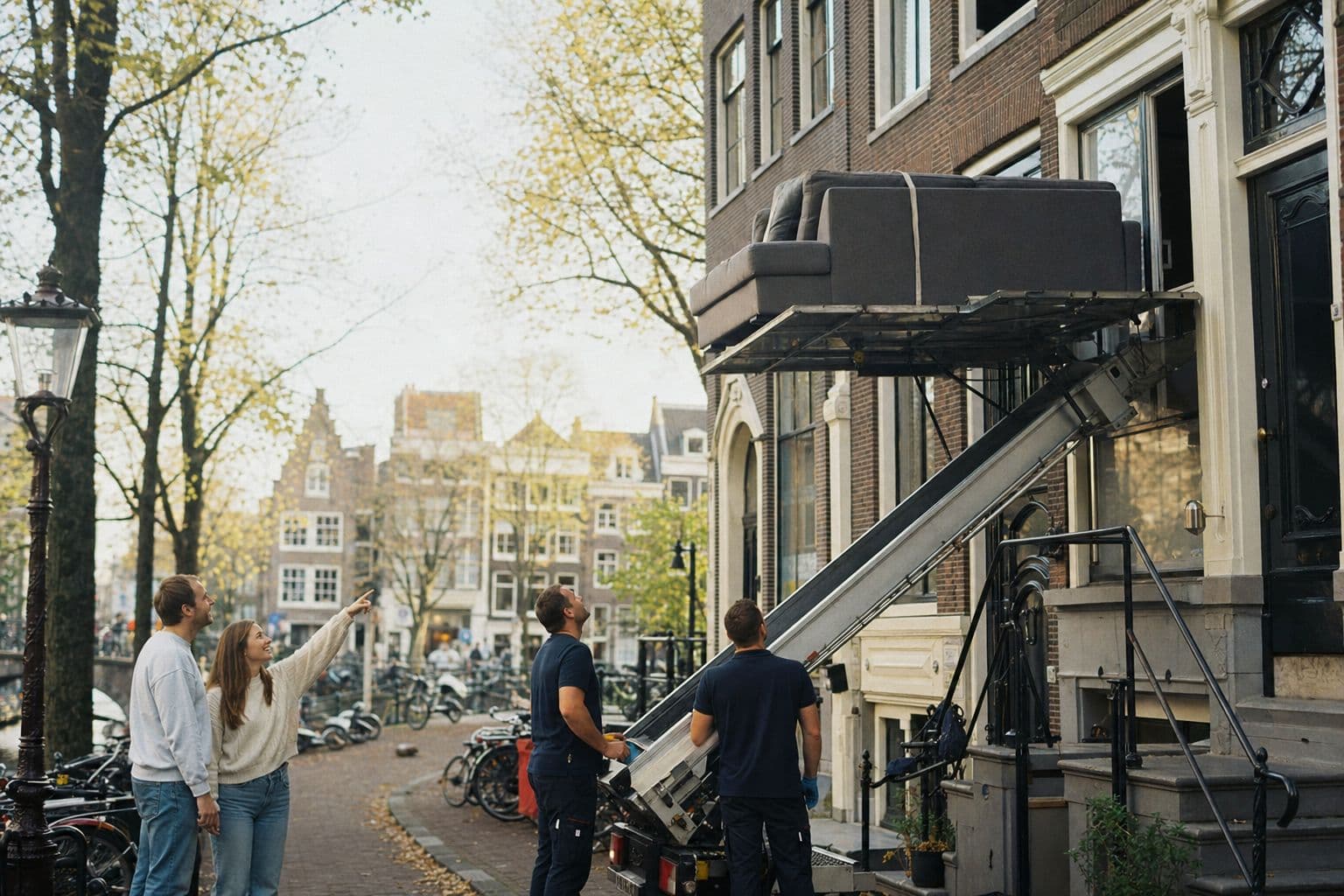
Verhuizen naar Amsterdam vraagt extra planning. Veel woningen hebben smalle, steile trappen - een verhuislift is vaak noodzakelijk en moet je ruim van tevoren reserveren. Houd rekening met 200-500 euro voor een verhuislift, afhankelijk van de hoogte.
Vraag tijdig een parkeerontheffing aan bij de gemeente voor je verhuiswagen. Dit kost circa 30-50 euro en is verplicht in veel wijken. Zonder ontheffing riskeer je een boete. Vraag deze minimaal twee weken voor je verhuisdatum aan.
Geef je verhuizing door aan de gemeente Amsterdam, bij voorkeur binnen vijf dagen. Dit kan online via mijn.amsterdam.nl. Vergeet ook niet je energieleverancier, internetprovider en verzekeringen op de hoogte te stellen.
Moving tips
- Vraag minimaal twee weken voor je verhuizing een parkeerontheffing aan bij de gemeente.
- Reserveer een verhuislift als je boven de tweede verdieping woont - de meeste Amsterdamse trappen zijn te smal voor grote meubels.
- Schrijf je zo snel mogelijk in bij een huisarts, vooral in populaire wijken raken praktijken snel vol.
- Koop een goede fiets met een stevig slot - fietsen is de snelste manier om door Amsterdam te reizen.
- Overweeg de maanden januari-maart voor je verhuizing: minder drukte en vaak lagere verhuistarieven.
- Check of je wijk een milieuzone heeft als je een oudere auto hebt.
Frequently asked questions
- Hoeveel kost het om naar Amsterdam te verhuizen?
- Een verhuizing naar Amsterdam kost gemiddeld 500-2.000 euro, afhankelijk van de afstand, het volume en of je een verhuislift nodig hebt. Een verhuislift kost 200-500 euro extra. Vergelijk altijd meerdere offertes via Moving.nl.
- Hoe schrijf ik me in bij de gemeente Amsterdam?
- Je kunt je verhuizing online doorgeven via mijn.amsterdam.nl, vanaf vier weken voor tot vijf dagen na je verhuisdatum. Je hebt je DigiD nodig. De inschrijving is gratis.
- Welke wijk in Amsterdam is het meest betaalbaar?
- Nieuw-West, Zuidoost en delen van Noord bieden de meest betaalbare huurprijzen. Reken op 1.200-1.600 euro per maand voor een appartement in de vrije sector in deze wijken.
- Heb ik een parkeervergunning nodig in Amsterdam?
- In de meeste wijken binnen de ring heb je een parkeervergunning nodig. De kosten varieren per stadsdeel, van circa 30 tot 600 euro per jaar. De wachtlijsten kunnen lang zijn, dus vraag deze zo snel mogelijk aan.
- Is Amsterdam geschikt voor gezinnen?
- Zeker. Amsterdam heeft uitstekende scholen, veel speeltuinen en groene ruimte. Wijken als Amsterdam-Zuid, Buitenveldert en delen van Oost zijn bijzonder populair bij gezinnen dankzij de nabijheid van scholen en parken.